






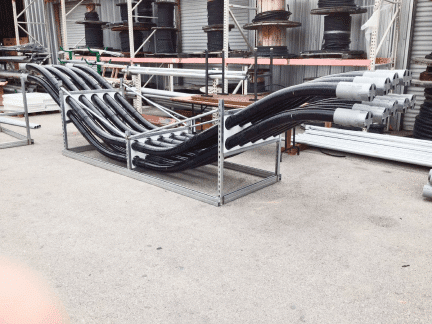


- Corrosion can be caused by chemical reactions such as oxidation and includes galvanic corrosion, atmospheric corrosion, and uniform corrosion
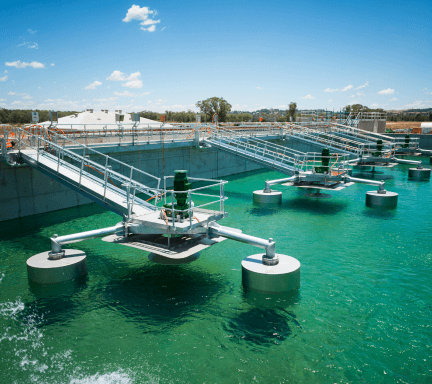
- Environments where corrosion occurs include wastewater treatment plants, chemical plants and coastal environments such as piers and ports
- In industrial construction project applications in corrosion-prone environments, it’s important to select a corrosion-resistant conduit for longevity and better return on investment
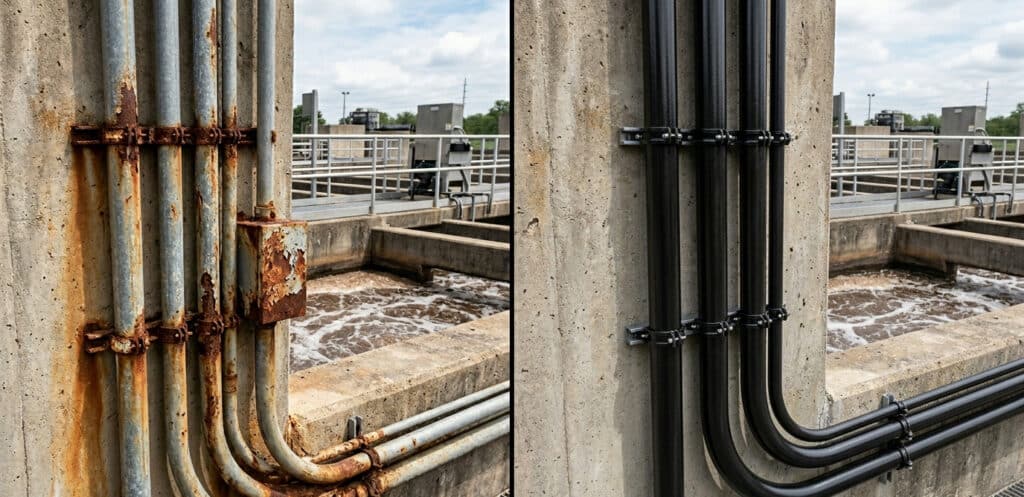
Corrosion is one of the leading causes of electrical conduit failure across industrial, utility, transportation, and infrastructure projects. For electrical engineers and contractors, selecting the right conduit material can significantly impact long-term maintenance costs, system reliability, and installation lifespan.
In corrosive environments, conduit selection is not simply about code compliance. It is about durability, lifecycle performance, and minimizing future replacement work. When evaluating non-metallic conduit for corrosive environments versus traditional metallic systems, the differences in long-term performance can be significant.
As facilities face increasing exposure to moisture, chemicals, salt spray, and aggressive soils, engineers are comparing fiberglass conduit vs. PVC, steel, and aluminum to determine which material best fits their application. RTRC conduit (reinforced thermosetting resin conduit), including Champion Duct®, continues gaining traction as a conduit for corrosive environments where long-term corrosion resistance is critical.
Why Corrosion Resistance Matters in Electrical Conduit System
Left unchecked, corrosion can cause millions of dollars of damage related to repairs and replacements, and in some cases, life-threatening conditions including explosions in refineries and gas transmission plants.
Corrosion may be inevitable, but it is controllable. By specifying a highly corrosion-resistant electrical conduit type engineers can expand the lifespan of an electrical system, reducing costs for time, materials, and labor over time, and improve environmental safety for countless workers.
Electrical conduit systems may be exposed to:
- Saltwater and coastal environments
- Wastewater treatment chemicals
- Industrial washdowns
- Corrosive soils
- Chemical processing operations
- Underground moisture intrusion
- Freeze-thaw cycles and deicing salts
Over time, corrosion can compromise conduit integrity, increase maintenance costs, and create reliability concerns for critical electrical infrastructure.
The National Electrical Code (NEC Article 355) permits fiberglass RTRC conduit in corrosive environments and wet locations where metallic systems may require additional coatings or ongoing maintenance.
For many projects, engineers now compare conduit materials not only on upfront cost, but also on lifecycle performance in harsh environments.
Electrical Conduit Materials Comparison
| Property | Fiberglass RTRC | PVC | Galvanized Steel | Aluminum |
| Corrosion Resistance | Excellent | Moderate | Limited in corrosive environments | Moderate |
| Chemical Resistance | Broad chemical resistance | Limited with some chemicals | Vulnerable to chemical attack | Vulnerable in some environments |
| Saltwater Performance | Excellent | Moderate | Susceptible to corrosion | Susceptible to pitting |
| UV Resistance | Excellent | Can degrade over time | Good | Good |
| Weight | Lightweight | Lightweight | Heavy | Moderate |
| Installation Labor | Lower labor requirements | Moderate | Higher labor requirements | Moderate |
| Cable Fault Resistance | Cable does not weld to conduit interior | Cable can melt/weld | Cable can weld | Cable can weld |
| Burn-Through Resistance During Cable Pulling | No burn-through on elbows | Burn-through possible | Resistant | Resistant |
| Maintenance Requirements | Low | Moderate | Higher in corrosive areas | Moderate |
| Typical Service Life in Harsh Environments | Long-term durability | Application dependent | Coating dependent | Environment dependent |
Traditionally PVC conduit has been used in electrical raceway systems requiring corrosion resistance in low to moderate temperate environments. PVC conduit is not rated for high temperatures.
Aluminum conduit is rated for solvents like acetone as well as fuels, but is not recommended for salts, alkaline materials, mild acids, or oxidizing agents due to its limited corrosion protection.
RMC (rigid metal conduit) or rigid steel conduit is susceptible to corrosion in harsh environments, threatening the integrity and durability of the electrical system without the addition of PVC coating or the application of zinc coating through hot-dip galvanizing.
When comparing fiberglass conduit vs. steel, the weight difference alone can reduce installation labor significantly, and fiberglass requires no galvanization or PVC coating to resist corrosion.
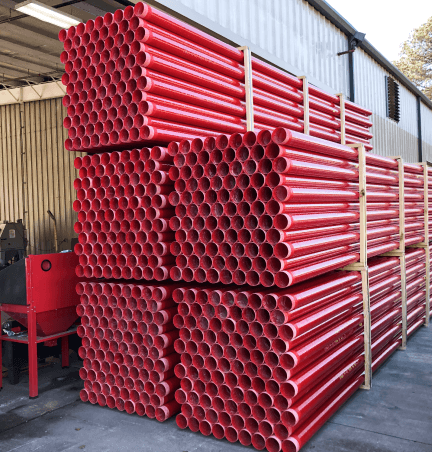
Fiberglass conduit, or RTRC electrical conduit pipe, offers the broadest range of corrosion resistance among in-market electrical conduit materials. RTRC is corrosion-resistant to many chemicals and an appropriate choice for highly corrosive environments like wastewater treatment and chemical plants, bridges, and coastal applications.
Champion Duct® fiberglass conduit is engineered for above-ground, below-ground, concrete-encased, underbridge, and corrosive environment applications.
Learn more about Champion Duct® fiberglass electrical conduit:

Why Engineers Specify Fiberglass Conduit for Corrosive Environments
Fiberglass electrical conduit continues gaining adoption because it combines corrosion resistance with installation and maintenance advantages.
Corrosion Resistance
Fiberglass conduit resists many chemicals, moisture conditions, and corrosive atmospheres that can impact metallic conduit systems. This makes fiberglass conduit a strong option for wastewater facilities, chemical plants, marine infrastructure, and underground installations.
Lightweight Installation
Compared to steel conduit systems, fiberglass conduit is significantly lighter, helping reduce installation labor and improve handling on large projects.
Cable Pulling Performance
Champion Duct® features a low coefficient of friction and no burn-through on elbows during cable pulling operations. Burn-through refers to conduit elbow failure caused by pulling force during cable installation, which can occur with PVC conduit systems.
Cable Fault Resistance
Under certain fault conditions, cable can melt or weld to the inside of PVC or metallic conduit. With fiberglass conduit, the cable can typically be removed and replaced without damaging the conduit system. This can help simplify maintenance and reduce replacement costs.
Long-Term Lifecycle Benefits
In highly corrosive environments, reducing replacement frequency and maintenance downtime can improve total project value over the life of the installation.
How do environmental factors affect corrosion resistance?
Natural environmental factors such as temperature and humidity, as well as industrial elements like dust and exposure to harsh chemicals can affect the ability of both metallic and nonmetallic electrical systems to combat corrosion to varying degrees.
Industrial settings are especially susceptible to corrosion, and few environments are more caustic than wastewater treatment facilities where sodium hypochlorite (bleach), polymer wastewater sludge, liquid oxygen, and waste-activated sludge can wreak havoc on aging electrical conduit systems. Chemical plants, refineries, food and beverage process plants, and mining environments all pose similar threats.
Marine and coastal environments, as well as bridge and transportation settings, can also introduce highly corrosive elements like salt from saline ocean and bay water as well as road maintenance efforts to electrical systems.
Best Conduit Materials by Industry
| Industry | Common Corrosion Concern | Recommended Conduit Considerations |
| Wastewater Treatment | Chemicals, moisture, hydrogen sulfide | Fiberglass RTRC for corrosion and chemical resistance |
| Chemical Processing | Aggressive chemicals and washdowns | Fiberglass conduit with chemical compatibility review |
| Marine & Coastal Infrastructure | Salt spray and humidity | Nonmetallic corrosion resistant conduit |
| Transportation Infrastructure | Moisture, deicing salts | Durable conduit with long-term corrosion resistance |
| Utilities | Underground moisture and soil corrosion | Lightweight conduit with corrosion resistance |
| Data Centers | Reliability and cable pulling performance | Low friction conduit with cable fault resistance, low RHO value |
| Industrial Manufacturing | Chemical exposure and washdowns | Corrosion resistant electrical conduit systems |
Designing for Harsh Environments
No conduit material is ideal for every application. Environmental exposure, chemical compatibility, temperature range, installation method, and maintenance expectations should all be evaluated during specification.
For projects involving chemical exposure, engineers should review chemical compatibility documentation during material selection.
Additional resources:
Applicable Standards
The National Electrical Code (NEC) establishes guidelines for material use by Class, Division, and Group. It is important to check the NEC rating of conduit products by manufacturer, as their product standards may fall above or below the substrate guidelines provided by the NEC. Refer to NEC Article 501 (Gasses, Vapors, and Liquids), Article 502 (Dusts) and Article 503 (Fibers and Flyings) for more details.
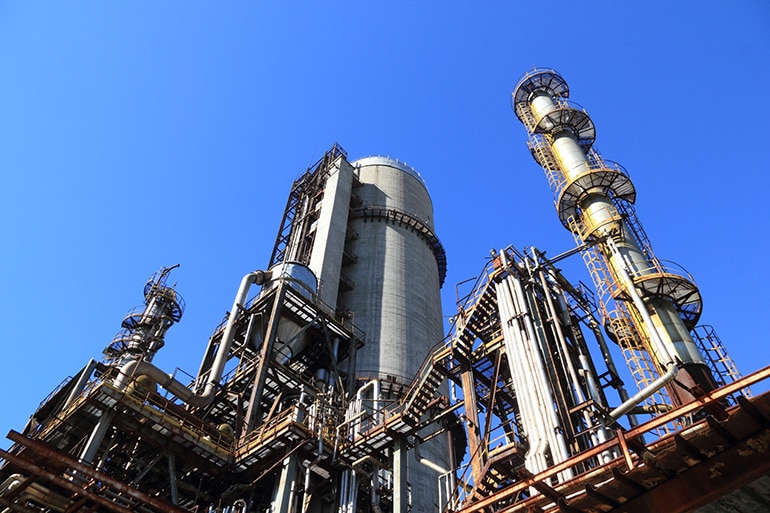
Learn how fiberglass conduit contributed to success in harsh environments.
Chemical Processing Facility Project
In this chemical plant application, corrosion resistance and long-term durability were critical design requirements due to exposure to aggressive industrial environments. Champion Duct® fiberglass conduit was selected to help support reliable electrical infrastructure while reducing concerns associated with metallic conduit corrosion in chemical processing operations.
-> Learn More
Hermosa Beach Pier Corrosion-Resistant Conduit Installation
Coastal and marine environments create ongoing challenges for electrical systems because of salt spray, humidity, and moisture exposure. For the Hermosa Beach Pier lighting upgrade project, fiberglass conduit was selected to support long-term corrosion resistance in a harsh coastal environment while helping protect critical electrical infrastructure.
-> Learn More
Reagan National Airport Runway Pier Project
Transportation infrastructure projects often require conduit systems capable of withstanding moisture exposure and demanding environmental conditions. In this airport pier application, fiberglass conduit provided a corrosion resistant solution designed to support long-term infrastructure reliability near the runway environment.
-> Learn More
Haas Automation Soil Corrosion Project
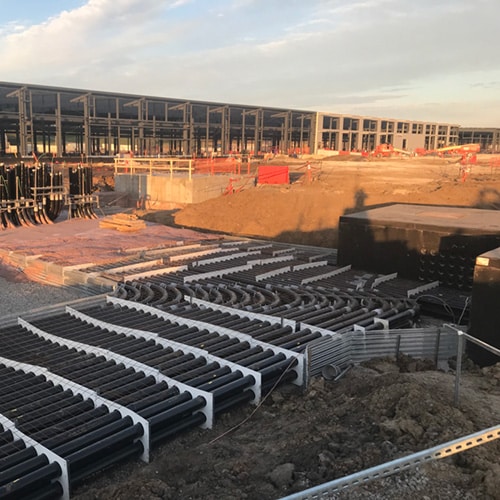
Underground conduit installations can face accelerated deterioration in corrosive soil conditions. In the Haas Automation project, fiberglass conduit was used in an application where soil corrosion resistance and long-term underground performance were important considerations for protecting electrical infrastructure and reducing future maintenance concerns.
-> Learn More
For project-specific support and product selection guidance, find a Champion Fiberglass representative in your region.
This article was originally published on February 21, 2022 and recently updated with new and helpful information.
Frequently Asked Questions
What is the best conduit for corrosive environments?
The best conduit for corrosive environments depends on the application, chemical exposure, and installation conditions. Fiberglass RTRC conduit is commonly specified for wastewater treatment plants, chemical facilities, marine infrastructure, and underground applications because of its corrosion resistance and lightweight installation advantages.
Is fiberglass conduit corrosion resistant?
Yes. Fiberglass electrical conduit is designed to resist moisture, salt spray, corrosive soils, and many industrial chemicals. Engineers often specify fiberglass conduit in environments where metallic conduit systems may corrode over time.
How does fiberglass conduit compare to PVC and steel?
Fiberglass conduit offers corrosion resistance similar to or greater than PVC while also providing higher strength, no burn-through, and cable fault resistance benefits. Compared to steel conduit, fiberglass conduit is significantly lighter and does not require galvanization or coatings to resist corrosion.
What conduit is best for wastewater treatment facilities?
Conduit for wastewater treatment facilities must withstand moisture, hydrogen sulfide exposure, and aggressive cleaning chemicals. Fiberglass RTRC conduit is frequently used in these environments because of its corrosion resistance and long-term durability.
Can fiberglass conduit be used underground?
Yes. Fiberglass conduit can be used in underground applications, including direct burial and concrete-encased installations. It is commonly specified in areas where soil corrosion is a concern.