








By Scott Patchan
- Heavy conduit and piping systems demand structural integrity, speed of installation, and long-term durability.
- The right strut system helps engineers and contractors reduce installation time while improving long-term outcomes.
- Corrosion-resistant fiberglass strut systems provide measurable advantages across industrial environments.
Strut System Design in Industrial Applications
In the environments where heavy conduit and piping runs are the most critical, steel corrodes rapidly. In chemical plants, data centers, wastewater treatment facilities, and at coastal sites, support systems must account for:
- Load capacity and load-bearing requirements for conduit and piping runs
- Environmental exposure, including temperature, moisture, salt, and chemicals
- Installation labor efficiency and project timelines
- Maintenance accessibility and lifecycle cost
Traditional metallic systems often introduce challenges such as corrosion, weight, and labor-intensive installation. Fiberglass systems address these issues with a non-corrosive, lightweight alternative.
Key Considerations
- Steel strut in corrosive environments can require replacement in as few as five years, driving up total project cost.
- Heavier metallic support systems increase dead load, a critical constraint on piers, elevated structures, and prefabricated builds.
- Installation speed directly affects labor cost, and lighter material can be installed more quickly.
Champion Strut® is a complete fiberglass strut support system engineered to address all three. It is a non-metallic channel framing system that includes channels, fittings, threaded rods, pipe clamps, fasteners, nuts, wall support racks, and hangers. This complete system is ideal for mounting conduit and mechanical piping in the most demanding industrial environments.
Specifying a support system for your next project?
Download the Champion Strut® Product Catalog or contact a Champion rep for project-specific guidance.

How Non-Metallic Strut Channel Changes the Equation
A non-metallic strut channel system eliminates oxidation, the primary failure mode of steel framing. Champion Strut® is manufactured via the pultrusion process, where continuous glass fiber strands and mats are pulled through a heated resin die to produce channels with consistent mechanical properties along the full length. This process allows multiple profile shapes and creates a product that:
- Does not rust, corrode, or require protective coatings
- Will not conduct electricity
- Is UV-resistant through built-in UV inhibitors and a polyester surfacing veil
- Is fire retardant
- Weighs significantly less than steel or aluminum equivalents
- Can be field-cut and drilled with standard tools
Both polyester resin (dark grey) and vinyl ester resin (beige) formulations are available. Vinyl ester provides enhanced chemical resistance for the most aggressive environments. A full chemical resistance guide is available for specification review.
Champion Strut also supports complete system compatibility. The CS-SST Series channel accommodates rigid conduit steel pipe straps, giving contractors flexibility when transitioning between material types on a project.
Installation Rates and Labor Optimization for Heavy Conduit Runs
For contractors estimating heavy conduit runs and their associated support work, labor is often the largest line item. The NECA Manual of Labor Units provides standardized productivity benchmarks.
Champion Fiberglass has published NECA labor unit data specifically for fiberglass strut:
Download the Strut NECA Manual of Labor Rates
Key Considerations
Lighter material = faster installation. Because fiberglass strut weighs substantially less than equivalent steel framing, crews can move and position channels faster, with less fatigue, particularly on overhead runs.
Field fabrication is straightforward. Channels can be cut with standard saws and drilled with standard bits. No special tooling is required on site.
The NECA labor unit data for fiberglass strut supports accurate bid preparation and helps contractors demonstrate realistic installation timelines to project owners.
For projects where installation cost is a deciding factor, fiberglass strut’s weight advantage routinely translates directly to measurable labor savings. At the Hermosa Beach Pier project, for example, lightweight Champion Fiberglass conduit and strut were cited as direct contributors to on-site cost savings during installation.
Design for Performance and Efficiency
Strut support systems are a foundational component of industrial infrastructure. Selecting the right material and design approach can improve installation rates, reduce lifecycle costs, and enhance system reliability.
Best Practices for Designing Strut Support Systems
- Specify corrosion-resistant materials for long-term performance
- Optimize support spacing and layout for load distribution
- Consider installation efficiency early in the design phase
- Align material selection with environmental exposure conditions
- Use manufacturer resources and case studies to validate design decisions
Where Fiberglass Strut Performs Best: Industrial Applications
Data Centers
- High-density cable management requires reliable support systems
- Corrosion resistance supports long-term uptime and reduces maintenance
Coastal Infrastructure
- Salt exposure demands non-metallic solutions
- Fiberglass systems extend service life and reduce replacement cycles
Chemical Processing Plants
- Resistance to harsh chemicals ensures system integrity
- Minimizes downtime and maintenance interventions
Wastewater and Utility Systems
- Moisture-rich environments accelerate corrosion in metal systems
- Fiberglass strut provides consistent performance over time
Chemical Plants
At a large plastics manufacturer producing PVC resins, PVC-coated steel conduit and support systems were requiring replacement every five years due to chlorine exposure. The switch to Champion Fiberglass conduit, elbows, and strut eliminated that replacement cycle. Material costs were lower, installation was faster, and the system has continued to outperform the prior solution.
Champion Strut is available in vinyl ester resin for maximum chemical resistance and has been successfully deployed in refineries, chemical plants, rendering facilities, and pulp and paper operations.
→ Learn more about fiberglass solutions for chemical plants
Coastal & Port Authority Applications
Salt spray, humidity, and UV exposure create a chronic corrosion environment that defeats conventional metallic framing quickly. At the Hermosa Beach Pier in Los Angeles County project engineers specified Champion Strut CS-S Series channels and a complete strut fastening system. If GRC had been used instead, the pier would have carried nearly 10 times the weight of the fiberglass solution. The corrosion-resistant, lightweight combination met both the structural load requirements and the long-term durability demands of a marine environment.
→ View port authority and coastal applications
Data Centers
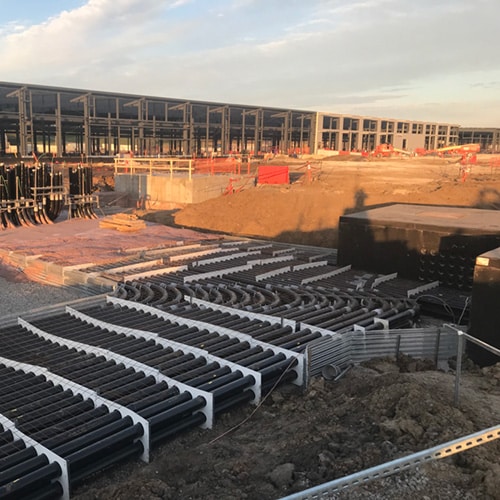
Data center construction demands fast, precise installation of dense conduit and cable management infrastructure. Fiberglass strut’s ease of field fabrication, lighter weight, and non-conductive properties make it a practical choice for data center support systems. Champion Fiberglass has been specified on data center projects where both speed of installation and long-term infrastructure reliability were project priorities.
→ Explore data center applications
Wastewater Treatment
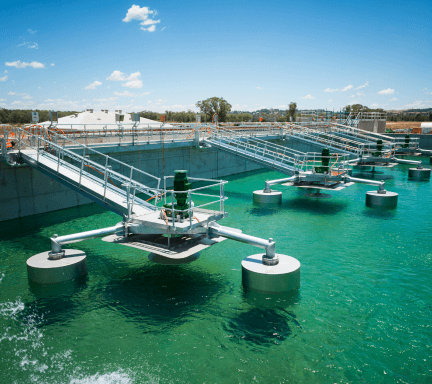
Wastewater treatment facilities are among the most corrosive environments in industrial construction. Hydrogen sulfide gas, chlorine, and standing water create conditions that rapidly deteriorate metallic infrastructure. Champion Strut has an established track record in these facilities, where a complete non-metallic system (conduit, strut, fittings, and fasteners) provides a corrosion-resistant solution.
→ Learn more about fiberglass for wastewater treatment
Designing a Complete Fiberglass Support System
For electrical engineers specifying fiberglass strut support systems, a complete Champion Strut installation typically includes:
- Multiple strut channel profiles selected based on load requirements and installation geometry
- Non-metallic fittings and accessories including angles, brackets, beam clamps, splice plates
- Threaded rods and fasteners that are fully non-metallic to prevent galvanic corrosion at connection points
- Pipe clamps and conduit hangers that are compatible with rigid conduit and mechanical piping
- Wall support racks for mounting conduit and piping to structure
The Champion Fiberglass product family also includes conduit, elbows, hangers, and bridge drain, providing a single-source, fully compatible fiberglass infrastructure solution across the full scope of an industrial project.
Mixing metallic fasteners into a fiberglass support system creates a weak point. A full non-metallic system eliminates galvanic corrosion and delivers the expected service life.
Frequently Asked Questions
What resin system should I specify for a chemical plant application? Vinyl ester resin (beige) provides enhanced resistance to acids, caustics, and solvents. Polyester resin (dark grey) is appropriate for less aggressive corrosive environments. Champion Fiberglass publishes a Chemical Resistance (SPI) Chart to support specification decisions.
Can Champion Strut® be used with steel conduit straps? Yes. The CS-SST Series channel accommodates rigid conduit steel pipe straps, providing flexibility where mixed-material installations are required.
What lengths of Champion Strut® are available? Standard 10-ft lengths. 20-ft lengths are available on special order.
Is Champion Strut® available in custom colors? Yes. Custom colors, including light grey polyester channels, are available upon request.
Ready to Specify Champion Strut®?
Visit Champion Strut to download the Champion Strut Product Catalog, the NECA Labor Rates, and related technical information, to support your next specification.
For project-specific support and product selection guidance, find a Champion Fiberglass representative in your region.