








By Scott Patchan
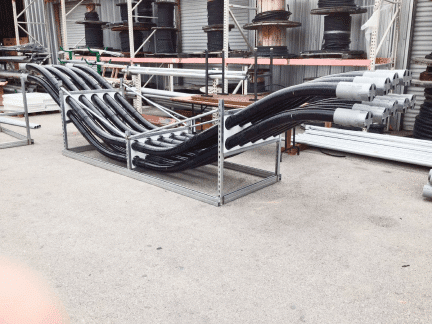
When material availability, installation efficiency, and long-term reliability are priorities, fiberglass electrical conduit offers a practical alternative to traditional PVC conduit. For engineers, contractors, and project managers, the benefits extend well beyond supply-chain considerations.
- Lighter weight: 100 feet of 4-inch standard wall fiberglass conduit weighs approximately 72 pounds, compared with 234 pounds for PVC Schedule 40 conduit.
- Faster installation: Current NECA labor units for 4-inch conduit are 7.43 hours per 100 feet for fiberglass, compared with 14 hours for PVC Schedule 40.
- Long-term reliability: Fiberglass conduit offers corrosion resistance, no burn-through during cable pulling, and cable fault resistance that simplifies future cable replacement.
PVC Shortages and Supply Chain Uncertainty
The PVC shortage that began in 2020 highlighted the vulnerability of construction projects to material supply disruptions. Since then, fluctuations in global energy and feedstock costs, manufacturing capacity, and transportation conditions have continued to influence the PVC market.
While availability, pricing, and lead times vary by supplier, region, and product specification, these changing market conditions underscore the importance of evaluating electrical conduit alternatives early in project planning.
Fiberglass electrical conduit offers a practical PVC alternative, providing procurement flexibility along with installation, durability, and long-term maintenance advantages that extend beyond supply-chain considerations.
Fiberglass: An Ideal Substitute for PVC Conduit
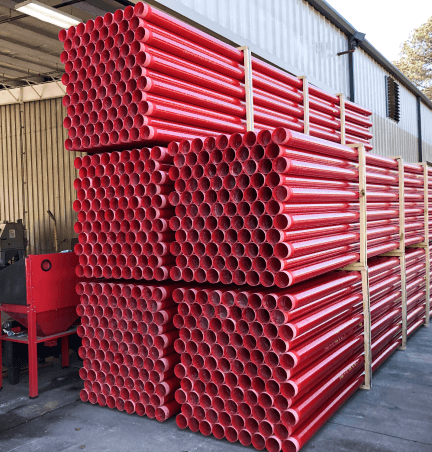
Champion Fiberglass® manufactures Champion Duct® epoxy fiberglass conduit for applications including underground electrical distribution, concrete-encased duct banks, industrial facilities, and data centers.
Fiberglass vs. PVC Conduit: A Technical Comparison
| Feature | Fiberglass Conduit | PVC Schedule 40 |
| Weight, 100 feet of 4-inch conduit | 72 lbs. | 234 lbs. |
| NECA installation labor, 100 feet of 4-inch conduit | 7.43 hours | 14 hours |
| Coefficient of friction, PVC-jacketed cable | 0.38 | 0.90 |
| Operating temperature range | -40°F to +230°F | +40°F to +150°F |
| Burn-through during cable pulling | No | Possible |
Source: Champion Fiberglass Conduit Comparison Chart. NECA labor figures are estimating units from the 2025–2026 Manual of Labor Units. Actual installation requirements depend on project conditions.
In many industries, project owners have found success with fiberglass conduit instead. Here’s why fiberglass conduit makes a great PVC electrical conduit alternative:
Lightweight Conduit Reduces Installation Labor
Whether above ground or below ground installation, fiberglass conduit installs in less time than PVC conduit, due in part to its light weight and ease of portability.
These advantages simplify handling, transportation, and positioning during above-ground and underground installation to reduce labor requirements. In suitable underground applications, the Champion Fiberglass gasket joining system allows conduit straight sections and elbows to be assembled without adhesive.
Reduced labor requirements can contribute to a lower total cost of ownership.
Lower Friction and No Burn-Through During Cable Pulling
Fiberglass conduit has a lower coefficient of friction than PVC Schedule 40 and Schedule 80 conduit. This property helps reduce pulling tension and can allow longer cable pulls with fewer pull boxes (resulting in reduced material costs), depending on project design.
Champion Fiberglass elbows also eliminate burn-through during cable pulling. This failure can occur when pulling forces cause a PVC elbow to break, resulting in conduit damage and repairs.
Cable Fault Resistance Simplifies Maintenance
Cable fault resistance provides additional maintenance advantages.
During certain electrical fault conditions, cables can melt or weld to the interior of PVC or steel conduit. Fiberglass conduit does not experience this type of cable adhesion, allowing affected cables to be pulled out and replaced without damaging the conduit.
This serviceability advantage is particularly relevant for facilities where electrical infrastructure reliability and maintenance access are critical.
Durability Across Demanding Environments
Champion Duct offers corrosion resistance, UV stability, and impact resistance for challenging applications.
Champion Duct epoxy fiberglass conduit offers an operating temperature range of -40°F to +230°F, compared with +40°F to +150°F for PVC Schedule 40 and Schedule 80 conduit.
Additionally, fiberglass conduit does not release toxic halogens, such as chlorine and bromine, when burning, unlike PVC conduit. These material properties make fiberglass conduit a practical choice for demanding installation environments.
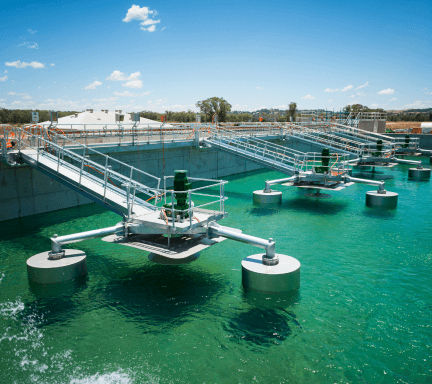
The product line includes UL-listed options for above-ground and below-ground installations, as well as configurations with UL-listed extended support spans, making fiberglass conduit a suitable consideration for utilities, wastewater treatment facilities, industrial and commercial construction, and transportation infrastructure.
Fiberglass vs. PVC Projects In Action
Real-world installations demonstrate how fiberglass conduit can address challenges involving labor, scheduling, and complex electrical infrastructure.
Data Center Alley: Installation Efficiency Through Prefabrication
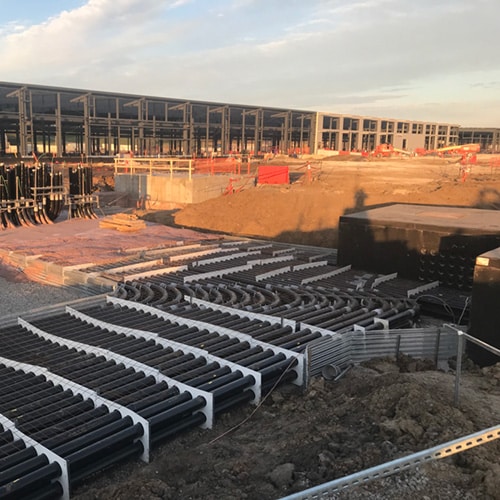
A major data center project in Virginia required 25 miles of conduit and heavy wall elbows for medium-voltage, telecommunications, and transformer duct banks.
Contractor Rosendin Electric utilized prefabricated fiberglass duct banks, taking advantage of the lighter weight for efficient handling and placement.
The documented project results included 60% total labor savings and a 63% increase in productivity compared with PVC.
> Read the Data Center Alley case study.
South Fork Wind Farm: Simplifying Complex Underground Installation
The South Fork Wind Farm project in New York required underground electrical infrastructure, including four miles of trenching along railway and roadway corridors.
Champion Fiberglass supplied lightweight conduit and custom bends to accommodate the installation requirements. Champion Duct’s high dielectric strength helped protect cables associated with the 138 kV transmission line.
The conduit weight, handling characteristics, and installation flexibility helped support successful, on-time project completion.
> Explore the South Fork Wind Farm case study.
Technology & Innovation
Made in the USA, Champion Fiberglass conduit is manufactured at a facility certified to ISO 9001, ISO 14001, and ISO 45001 standards.
In 2026, Champion Fiberglass commissioned its fifth production line in Spring, Texas, expanding manufacturing capacity to support growing infrastructure demand. With the addition of the fifth production line and the fourth line commissioned in April, Champion Fiberglass has doubled production capacity in less than six months, significantly increasing output through an expanded and digitally upgraded manufacturing facility.
Project planning resources include the Champion Fiberglass suite of estimating tools, including conduit, elbow, and epoxy calculators and Champ Pull, a pulling calculator that provides reliable calculations for informed cable and conduit design decisions. BIM/Revit models and technical assistance are available as well for product selection and installation.
Expanded manufacturing capacity, innovative product solutions, and responsive technical support help Champion Fiberglass serve growing infrastructure needs across utilities, data centers, bridges, tunnels, and water and wastewater treatment facilities.
Considering Fiberglass for an Electrical Conduit Project?
Choosing a PVC conduit alternative involves more than comparing material prices. Installation efficiency, cable pulling characteristics, durability, and maintenance requirements can all influence project outcomes.
Champion Fiberglass provides durable, lightweight electrical conduit solutions supported by technical expertise and American manufacturing.
Find a Champion Fiberglass sales representative or call 281-655-8900 to discuss project requirements, availability, and product selection.
Frequently Asked Questions About Fiberglass and PVC Conduit
Can fiberglass electrical conduit replace PVC Schedule 40 conduit?
Yes. Fiberglass conduit can replace PVC Schedule 40 in many applications, including underground duct banks, industrial facilities, commercial projects, and utilities. The appropriate conduit type, wall thickness, joining system, code requirements, and project specifications must be evaluated before substitution.
Does fiberglass conduit reduce installation costs compared with PVC?
Fiberglass conduit can reduce installation labor because of its light weight, ease of handling, and joining systems. Current NECA labor units also show lower estimated installation hours for fiberglass across several commonly used conduit diameters. Actual savings depend on material prices, labor rates, installation conditions, and project requirements.
Is fiberglass conduit available during a PVC shortage?
Fiberglass conduit provides an additional material option when PVC availability is constrained. However, fiberglass lead times also vary by conduit size, configuration, order volume, and production schedule. Confirming availability with a Champion Fiberglass sales representative is recommended when planning project procurement.
This article was originally published on January 14, 2021 and has been updated with new information.