








CHALLENGE
Southfork Wind Farm is New York’s first offshore wind farm. It consists of 12 turbines and a state-of-the-art transmission system that will generate enough clean energy to power 70,000 homes and offset tons of emissions each year. Located 35 miles east of Montauk Point, the underground transmission line will deliver power to the local grid in the town of East Hampton. It is a joint venture between Orsted, a clean energy company, and Eversource, the electrical provider.
At the time of the project, there were supply disruptions due to global market factors. Limited supply of some types of electrical conduit resulted in rising material costs. On top of that, weather issues and the pandemic were causing long lead times that were affecting project timelines. Finally, this project involved a complex buried installation requiring minimal disruption.
SOLUTION
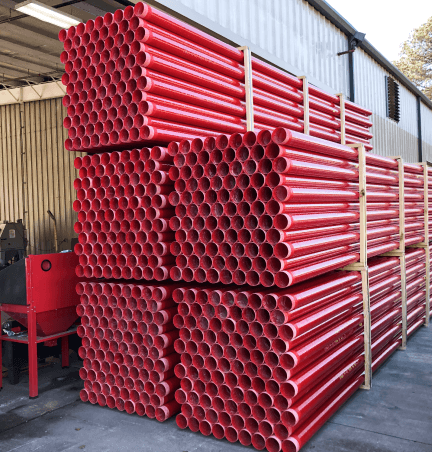
This project necessitated a strong and durable conduit capable of adequately protecting transmission lines to the local grid. Champion Fiberglass® manufactures fiberglass electrical conduit as an alternative to PVC that was available with shorter lead times. Additionally, the product proved more cost effective than other types of conduit, which made bottom lines more attractive.
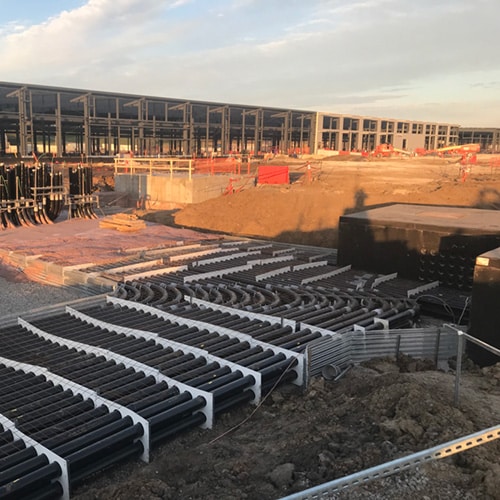
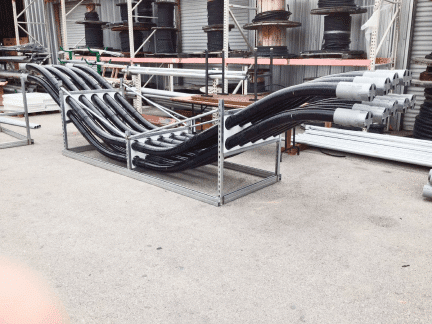
This was a complex installation with unique requirements including open trench excavation along four miles of railway and roadway with buried duct banks and use of conduit spacers. Champion Fiberglass conduit was lightweight and easy to maneuver into the trenches which facilitated installation. (Alternative conduit types such as PVC would have been heavier.) Also, Champion Fiberglass created custom bends that were helpful at certain points of the install. In short, fiberglass conduit’s light weight and ease of installation helped make this long buried installation fast and seamless.
RESULTS
Champion Duct®’s high dielectric strength helped protect cables along four miles of trenched installation delivering power via a single, 138kV alternating current (AC) transmission line. Better product availability, the lightweight nature of fiberglass conduit and ease of installation helped facilitate an on time and successful completion. Finally, lower costs helped the project stay within budget.