








CHALLENGE
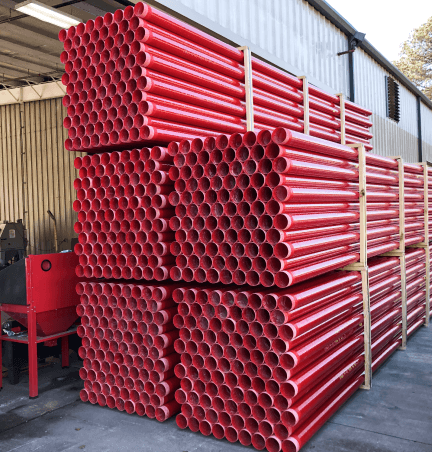
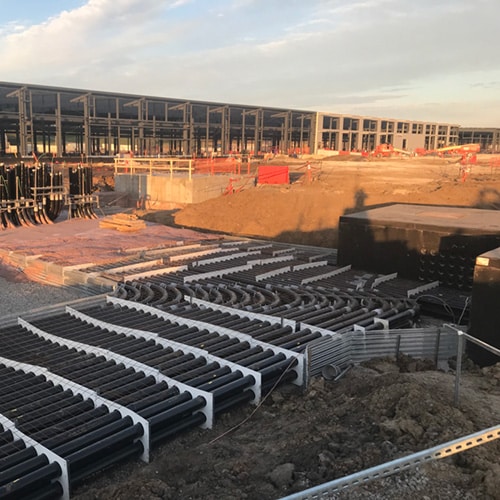
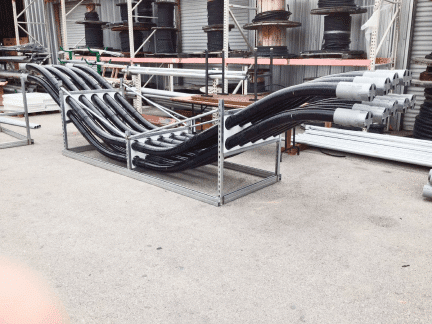
Large fleet charging stations require electrical conduit that can stand up to cable fault and burn-through caused by dense cable loads. Since conduit is usually buried, these projects also demand mechanical strength to withstand compaction and corrosion resistance to protect from soil conditions. Further, EV charging stations typically call for not only straight lengths but elbows to connect from the substation to the facility.
SOLUTION
- Fiberglass conduit elbows possess one of the lowest coefficients of friction of any conduit system – .38 compared to .55 for PVC-coated steel and galvanized rigid steel and .90 for SCH 40 and SCH 80 PVC. The benefit of a lower coefficient of friction is that it enables a faster, smoother pull with less labor time, cost and risk
- Fiberglass conduit is not affected by cable faults because cable does not melt or weld to the wall of the conduit as it can with PVC and GRC. So, when installing fiberglass conduit, contractors/stakeholders may be able to eliminate spare conduit runs that were allocated for faults
- Fiberglass conduit offers broad corrosion resistance to many chemicals so it tolerates harsh soil conditions and environmental elements
- Fiberglass is a rigid conduit with durability that resists soil compaction and impact
- Buy America-compliant fiberglass conduit is available with lower material costs than PVC-coated steel and GRC across most sizes
- Thanks to gasketed conduit and low installation rates per the NECA Manual of Labor Units, fiberglass installs faster than most other conduit types
BENEFITS
- Lack of burn-through, cable fault resistance, mechanical strength and corrosion resistance of fiberglass conduit encourage performance and project longevity
- Projects completed with lower material and installation costs than competing materials
- Installation is typically fast and seamless with 35+ years of customization and project guidance to help guide contractors to successful outcomes